Patient guide
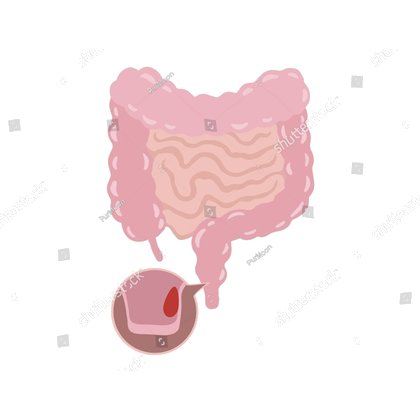
Watermarked Shutterstock comp for internal review. Replace with a licensed file before cutover.
The lining of the anus contains three cushions of soft, spongy padding that help seal the anus and prevent leakage of mucus. These pads (piles) are supported by connecting tissue and contain tiny blood vessels. Piles become problematic when the supporting structures no longer hold them in place and they slip down the anal canal; the blood vessels become engorged and the piles swell. In severe cases they may be pushed out of the anal canal during defecation. This is known as prolapsed piles.
The grade largely determines which treatments are worth considering, so establishing it is the first step.1
Pain is not a typical feature of internal piles as they sit above the pain-sensitive areas of the anal canal.1 Severe pain usually means something else, such as an anal fissure or a thrombosed external pile, and should be assessed rather than treated as ordinary piles.
The precise cause is unknown, but contributing factors include:
Symptoms tend to come and go. You could have piles if you notice:
For mild symptoms you can help yourself by washing the area gently with lukewarm water, avoiding excessive straining and heavy lifting, and not spending long periods on the toilet. Clean the area gently rather than rubbing it after passing motion. Soaking in warm water soothes symptoms, a cool compress can help, and loose, soft cotton underwear reduces discomfort and stops moisture from building up.2
To reduce the chance of piles returning:2
A flavonoid tablet taken alongside a fibre supplement has also been shown to help.1 If symptoms persist or worsen, consult your doctor. Treatment options include:
Diagnosis starts with your symptoms and an examination. This usually includes an internal examination and a proctoscope, a short instrument that lets the doctor see the lower anal canal directly. That is normally enough to confirm piles and to work out which grade they are.
Piles are common, so finding them does not confirm that they are the cause of your bleeding, and something else can be present further along the bowel at the same time. Where there has been bleeding, the colon above the rectum is examined as well, to rule out other causes.1 That usually means a colonoscopy if you are 50 or older, or if your symptoms do not fit straightforward piles.
No. There is no link between piles and cancer. However, the symptoms of piles, especially bleeding, are similar to those of colorectal cancer.2 Symptoms are worth investigating, and screening for colorectal cancer is recommended from age 50. A colorectal surgeon can assess your symptoms and advise which test is appropriate for you.
While piles do not become cancerous, assuming that bleeding is caused by piles can delay the diagnosis of another condition, which is generally easier to treat when found early.
See a doctor if symptoms are no better after 7 days or are getting worse, and also if you notice any of the following:2
See a doctor early for severe, constant anal pain. It points away from ordinary internal piles and towards a fissure or a thrombosed external pile, which are managed differently.
Usually not. Internal piles sit above the pain-sensitive part of the anal canal, so pain is not common.1 Prolapse, bleeding and itching are the more typical symptoms. Severe pain suggests an anal fissure or a thrombosed external pile rather than ordinary piles, and should be assessed.
Most people do not. The grade largely decides the approach. Diet, fibre and fluids may be enough for first-degree piles, and banding suits first, second and third-degree piles.1 Surgery is generally reserved for third and fourth-degree piles, or for symptoms that have not responded to simpler measures.
Yes, recurrence is possible after any treatment, and the chance varies by procedure. Banding may need to be repeated. Conventional haemorrhoidectomy is the most complete method but has the longest recovery, while less invasive options recover faster and carry a somewhat higher chance of symptoms returning. Keeping fibre and fluid intake up and avoiding straining helps.
Bleeding from piles is usually small in volume and bright red, but it should not be assumed to be the cause. Where there has been bleeding, the colon above the rectum should be examined as well, to rule out other causes.1 Bleeding at times other than passing motion is a particular reason to get checked.2
Mild symptoms often resolve with self-care. If symptoms are no better after 7 days, or are getting worse, see a doctor.2 Piles that prolapse tend to progress over time rather than resolve, because the supporting tissue does not repair itself.
BUILD NOTE: Dr Chen’s original text is preserved throughout; the added sections and all cited figures have NOT yet been read by him. Both sources were fetched and checked on 22 September 2026. Figures quoted are NUH’s published rates, not this clinic’s outcomes, and the page says so. THD is described in Dr Chen’s original copy but is not covered by either source, so it carries no citation.
Message Dr Chen's clinic on WhatsApp or request an appointment.

